How To Use Anti Spy Detector?
Using an anti-spy detector is becoming more important as our digital lives expand and the threat of surveillance increases. With such tools, you can detect hidden cameras, microphones, and wireless bugs that could potentially infringe on your privacy. But how exactly do these devices work, and how can you use them effectively? Let’s unravel the mystery of the anti-spy detector while sprinkling in some practical advice to ensure you don’t end up “spying” on yourself in the process.
Imagine this scenario: you’ve booked a stay at a swanky Airbnb or a boutique hotel, but you start wondering—could there be a hidden camera in the room? It sounds like something out of a spy thriller, but yes, it’s a real concern these days. This is where an anti-spy detector steps in to save the day.
Understanding the Basics of Anti-Spy Detectors

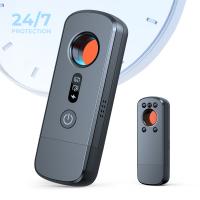
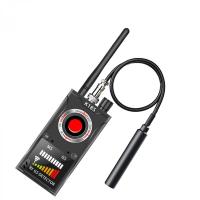
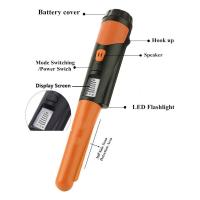
Anti-spy detectors are devices specifically designed to search for suspicious equipment such as micro cameras, GPS trackers, or covert microphones. They typically identify signals sent by such devices (like radio frequencies) or help locate physical evidence (like reflective lenses on hidden cameras). In simple terms, these gadgets are your personal digital detectives, hunting down anything that’s not supposed to be there.
Modern anti-spy devices usually come equipped with features like radio frequency (RF) scanning, infrared detection, and even magnetic fields measurement. Each function has a specific purpose, and you need to know which one to lean on depending on the type of surveillance threat you suspect.
Step-by-Step Guide to Using an Anti-Spy Detector

Let’s break down the process of using an anti-spy detector into digestible steps:
1. Understand Your Environment
Before whipping out your anti-spy device, evaluate your surroundings. Are you checking a hotel room, an office, or your car? The environment will dictate your approach. For example, in a hotel, you may focus on hidden cameras in places like air vents or bedside lamps. In your car, GPS trackers linked to location surveillance could be your main concern.
2. Familiarize Yourself With the Device
Every anti-spy detector comes with an instruction manual (read it—yes, even if you think you already know everything). Get to know the buttons, lights, and indicators. Most devices operate with a simple scanning mode; however, advanced models have adjustable sensitivity levels. Think of this as tuning in to your spy frequency. If the detector is too sensitive, you’ll get false positives (a refrigerator might suddenly seem suspicious—please don’t call Interpol).
3. Start the RF Scan
The RF scanner is one of the most common methods employed by anti-spy detectors. It detects electromagnetic radio waves generated by wireless devices. First, turn off any non-essential electronic items in the room—Wi-Fi routers, Bluetooth speakers, smart TVs—to reduce "noise" during scanning. Now, as you move the detector around, pay attention to areas like:
Corners and ceilings: These are prime hiding spots for hidden cameras.
Electrical outlets and chargers: Some surveillance gadgets are disguised as everyday items.
Decorative pieces: That seemingly innocent wall clock might just be watching you.
If the detector starts beeping or the signal strength indicator spikes, you’ve got suspicious activity—time to zero in further.
4. Perform a Physical Check
While RF detection is great for finding wireless signals, you still want to search for passive devices like wired cameras that don’t broadcast anything. Use the infrared function on your detector to locate camera lenses. Infrared emits a glowing red light upon detecting reflective surfaces, making it easier to spot those hidden lenses. This technique is particularly effective for spy cameras embedded in furniture or walls.
5. Use Magnetic Fields Detection (Optional)
Some surveillance devices use magnets, like those found in GPS trackers. If your anti-spy detector has this feature, employ it to scan surfaces in your car or under heavily metallic areas. Suspicious magnetic fields usually indicate a tracking device.
6. Adjust Sensitivity Levels
If your detector is too sensitive, it may pick up signals even from benign devices like your smartwatch or smartphone. Lowering the sensitivity minimizes false alarms—help yourself out by taming the beast before diving too deep into spy-hunting mode.
7. Repeat and Confirm
Surveillance devices are sneaky; they’re designed to be easy to overlook. To ensure you haven’t missed anything, scan the room or area multiple times. Take your time—it’s not an Olympic sport, after all.
Common Pitfalls to Avoid
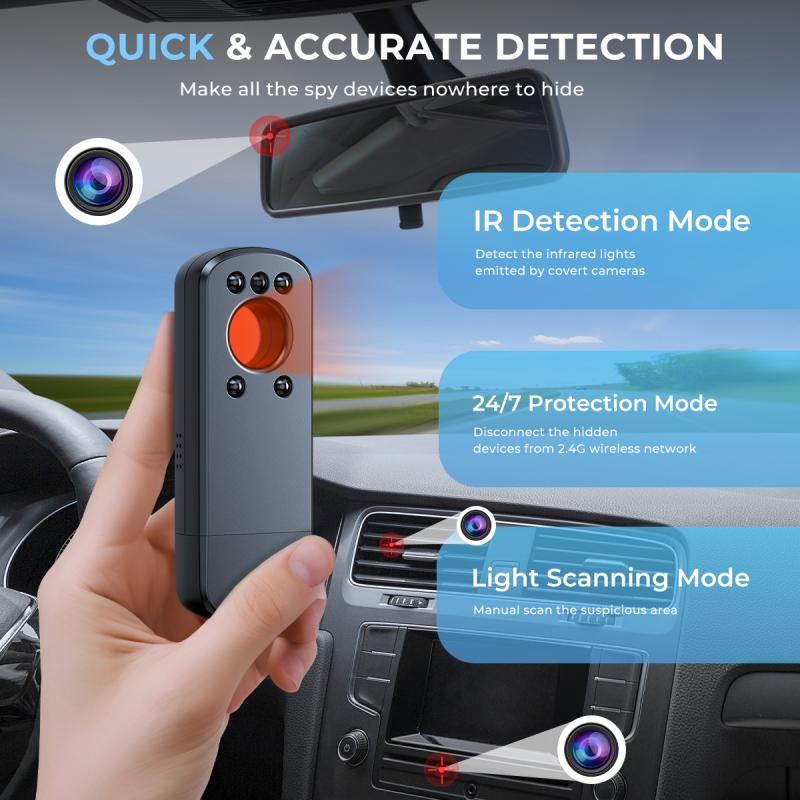
Even the best anti-spy gadget won’t save you if you misuse it. Let’s set the record straight on a few common mistakes:
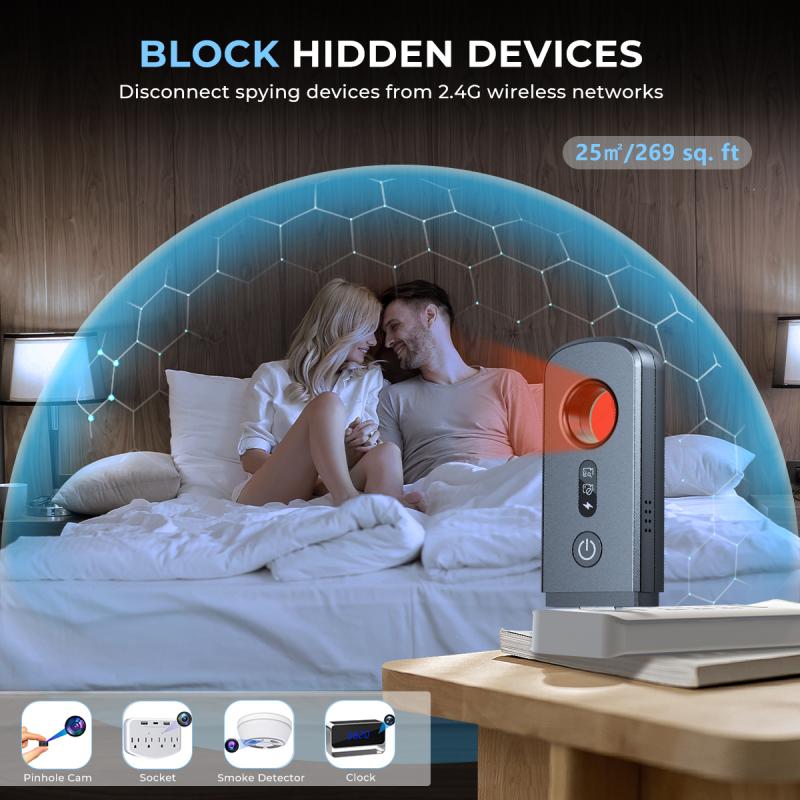
Overlooking Basic Items: Hidden cameras are often integrated into everyday objects like smoke detectors, charging docks, and even tissue boxes. If something looks entirely out of place—a tissue box mounted on the wall?—that might be your cue to investigate.
Neglecting Signal Noise: Wireless devices like routers or phones might interfere with your scanning efforts. Ensure these devices are turned off or moved away from your scan zone.
Misinterpreting Results: A pep talk is in order—many beeps from your detector are false positives. Think of it like sifting through treasure; exciting, but not everything is gold. Use follow-up checks (infrared or magnetic fields scanning) to confirm initial finds.
Bonus Tips for Advanced Detection Enthusiasts
1. Consider Multi-Frequency Detectors
Standard RF detectors pick up a narrow range of frequencies, which is fine for most situations, but better detectors can capture an extended spectrum. If you’re dealing with advanced surveillance equipment, a multi-frequency scanner may be worth the investment.
2. Pair With Mobile Apps
Some mobile apps can be used to detect hidden cameras by analyzing Wi-Fi networks for unfamiliar devices. Apps work best when paired with hardware detectors for a thorough assessment.
3. Look for Signal Jammers
Disabling spy devices is the ultimate countermeasure. Signal jammers create interference that disrupts GPS trackers, wireless mics, and cameras. However, these tools are restricted in certain regions, so check your local laws before going full James Bond.
The Fight Against Privacy Intrusions
Anti-spy detectors aren’t just tools—they’re the frontline defenders of your privacy. Use them wisely to secure homes, offices, and public spaces effectively. Sure, you may feel like a secret agent while scanning walls and furniture, but remember: it’s not paranoia if someone is genuinely watching.
On the brighter side, mastering anti-spy technology gives you peace of mind and the confidence to live your life without worrying about invisible eyes. So go ahead—empower yourself with the knowledge to defeat surveillance threats. Your private space deserves nothing less than the full-tech shield treatment.