How Deep Can Metal Detectors Detect Gold?
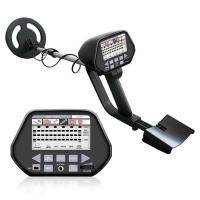
One common question among treasure hunters, hobbyists, and even seasoned prospectors is: How deep can a metal detector detect gold? It’s a fair question—if we’re chasing that elusive glitter hidden beneath layers of soil, we need to understand the tools at our disposal. Modern metal detectors pack some serious tech, but even the fanciest models have their limits. A combination of several key factors determines a metal detector's depth capabilities, from soil type and detector sensitivity to the size and composition of the gold you're hunting.
The Reality Check: No Magic Numbers
Let’s get one thing clear right off the bat: there isn’t a universal "maximum depth" that applies to all metal detectors. Claims like "20 feet underground!" or "Find treasure at 30 feet!" often oversimplify things—or worse, mislead you entirely. In reality, a metal detector working under optimal conditions might spot a sizeable gold nugget up to 2–3 feet (0.6–0.9 meters) deep, while smaller flakes or jewelry might be detected at far shallower depths.
However, this depth is profoundly influenced by environmental and technical variables. It’s not like finding gold in clean, uniform sand at the beach unfolds the same way as unearthing a gold nugget buried in tightly packed mineralized soil in a mountain pass. Below, I’ll break down the key players in metal detection depth.
Factor 1: Metal Detector Type
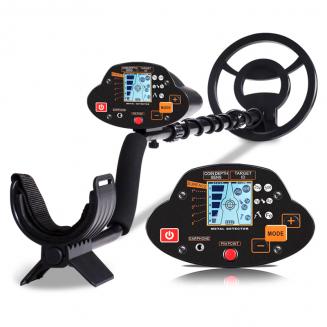
First, not all detectors are created equal. When it comes to detecting gold specifically, there are two main types of detectors to consider: Very Low Frequency (VLF) detectors and Pulse Induction (PI) detectors.
VLF Detectors:
These are incredibly popular among hobbyists due to their affordability and versatility. VLF detectors operate at frequencies typically between 3–30 kHz, and gold detectors tend to use the higher frequencies within this range. Why? Gold is highly conductive but often comes in small sizes, so higher frequencies improve sensitivity to smaller targets.
However, VLF detectors struggle with mineralized soils—that is, ground containing high levels of naturally occurring metals or magnetic properties. Mineralized soil can mask gold signals, reducing detection depth dramatically.
Average Depth for Gold Detection:
- Small gold (flakes or jewelry): 6–12 inches
- Larger gold nuggets: Up to 2 feet
PI Detectors:
If depth is king in your quest, PI detectors might be your throne. Pulse Induction detectors excel at punching through mineralized soil without batting an eyelash. They are less affected by the presence of "ground noise" and tend to penetrate deeper. However, these machines are typically pricier and may lack finesse with tiny gold pieces compared to their VLF counterparts.
Average Depth for Gold Detection:
- Small gold: 9–16 inches
- Larger gold nuggets: Up to 3 feet or more
Factor 2: Target Size and Surface Area
Think of gold nuggets as a signal antenna. The larger the nugget, the bigger the signal it bounces back to your detector. This means larger targets can be detected deeper underground, while small flakes or chains might only be identified at shallower depths. Furthermore, the orientation of a nugget or piece affects its detectability. A flat nugget lying horizontally (parallel to the detector) produces a stronger return signal than one oriented vertically. Geometry matters, and sometimes the gold itself decides to play hide-and-seek under layers of soil.
Factor 3: Soil Composition and Mineralization
Gold hunting rarely takes place in benign suburban landscapes with soft, fluffy garden dirt. Instead, prospectors often face complex and mineral-rich terrain that creates interference for their detectors. Soil packed with iron, salt compounds, or other conductive substances can muddle the signals emitted and returned by a detector.
To combat this, many newer detectors feature ground balancing technology. This critical feature filters out the interference caused by minerals or saline soil, enabling prospectors to focus on legitimate signals. However, no machine is immune to mineralization—it just manages it better or worse depending on the model.
Pro Tip:
Dry, sandy soil = better depth performance.
Highly mineralized, wet soil = reduced depth and erratic signals.
Factor 4: Sensitivity and Settings
Adjusting your detector’s sensitivity is like tuning your radio for clear signals. If the sensitivity is set too high, you’ll hear every false signal—including random metallic debris buried alongside your gold. If it’s set too low, you could miss smaller targets entirely. Finding the optimal sensitivity level for gold hunting involves trial and error based on your detector model and the ground conditions.
Additionally, pay attention to discrimination settings. While some detectors allow you to filter out certain metals (strong in urban environments but weaker for gold prospecting), discrimination can reduce depth capability. For gold-specific hunts, lower discrimination is often better to maximize signal accuracy.
Factor 5: Environmental Interference
Besides soil conditions, external factors come into play. Electrical interference from nearby power lines or electromagnetic fields can create havoc, especially in urban areas. If you're hunting gold near rock formations loaded with natural magnetic properties, interference can complicate the game even further.
Environmental factors also mean that depth is variable across different conditions. Dry ground, for instance, allows detectors to hit greater depths compared to wet or saline environments, where signals tend to scatter.
Practical Limitations and Advice
Gold hunting isn’t about buying the fanciest metal detector or assuming that you’ll uncover nuggets buried five feet underground on your first outing. It’s an evolving skill that rewards patience, knowledge of tools, and understanding of the terrain. Here are some practical tips for maximizing depth:
1. Invest in a Gold-Specific Detector: If gold is your sole target, opt for detectors tailored for gold prospecting. Models like Minelab GPZ 7000 or Garrett AT Gold deliver superior depth sensitivity for gold hunting.
2. Research Your Terrain: Study maps and geological surveys before heading out. Gold-rich areas typically share common characteristics, such as proximity to rivers or regions with a history of mining.
3. Test Your Detector: Before heading into the wilderness, bury a few test targets (like gold flakes or small nuggets wrapped in a plastic pouch) and see how your device performs at various depths in your backyard soil.
4. Be Ready for Manual Adjustments: Understand how to balance ground signals, tweak sensitivity, and sift promising signals from false ones. These adjustments can make or break your hunt.
5. Don’t Overspend on Depth: If your prospecting is done in areas with shallow washes or riverbeds, a detector offering maximum depth might not even be necessary.
So, How Deep?
If you've stuck around this far, let’s distill it into a concrete rule of thumb: metal detectors can typically spot gold at depths between a few inches and 3 feet under ideal conditions. Larger nuggets push that upper limit, while flakes or jewelry fall toward the shallower end.
If you want to dig deeper (pun intended), your best bet is high-quality equipment optimized for gold prospecting combined with a thorough understanding of your environment. But don’t forget—treasure hunting is as much an adventure as it is a science. Getting gold to the surface often requires more finesse than sheer detection power. So go forth boldly with your detector and remember: Every beep could be that jackpot moment.
Good luck out there, prospector—you’re chasing dreams, even if you don’t strike gold every time!