What Is a Neutral Density Filter?
If you’ve ever wondered how photographers capture dreamy waterfalls, cinematic skies, or perfectly exposed daylight portraits, the secret is often a small piece of glass in front of the lens — the Neutral Density (ND) filter.
Whether you shoot landscapes, portraits, or video, understanding ND filters is a game-changer for mastering light and exposure. In this guide, we’ll explain what a neutral density filter is, how it works, the different types available, and when to use one, with examples from professional practice.
1. What Is a Neutral Density Filter?
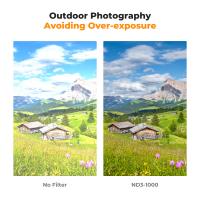
A Neutral Density (ND) filter is an optical filter that reduces the amount of light entering your camera lens — without affecting the colour or tone of the image.
Think of it as sunglasses for your lens. By limiting light, you can use slower shutter speeds, wider apertures, or both, even in bright conditions.
In simple terms:
ND filters let you control exposure creatively, not just technically.
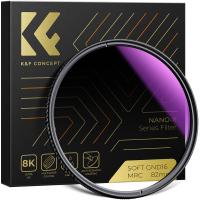
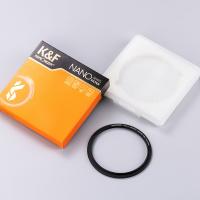
K&F Concept designs ND filters that provide precise light reduction and neutral colour balance, ensuring your photos stay natural and free from unwanted colour shifts.
2. Why Photographers Use ND Filters
ND filters are used across genres for different creative reasons. Here are the main benefits:
| Purpose | Description | Example |
|---|---|---|
| Long Exposure Photography | Allows slow shutter speeds in daylight to create motion blur. | Smooth waterfalls, flowing rivers, moving clouds. |
| Wide Apertures in Bright Light | Enables f/1.4–f/2.8 in midday sun without overexposing. | Shallow-depth portraits with creamy bokeh. |
| Video Exposure Control | Maintains cinematic shutter speed (1/50s for 25fps) even in bright scenes. | Professional outdoor filmmaking. |
| Balancing Brightness | Matches exposure levels between bright sky and darker foreground. | Landscapes with high dynamic range. |
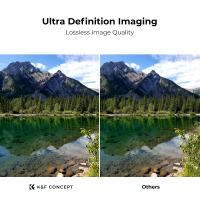
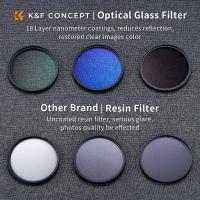
K&F Concept ND filters are crafted using multi-layer nano-coatings to resist reflections, fingerprints, and water, ensuring clear results in any environment.
3. How Does a Neutral Density Filter Work?
A neutral density filter is made of optical glass coated with layers that absorb or block specific percentages of light.
When light passes through, its intensity decreases — but the colour spectrum remains balanced (“neutral”).
The amount of light reduction is measured in stops. Each “stop” halves the light:
-
ND2 cuts 1 stop (50% light reduction)
-
ND4 cuts 2 stops
-
ND8 cuts 3 stops
-
…and so on
Here’s a quick reference table:
| Filter Type | Light Reduction | Stops | Typical Use |
|---|---|---|---|
| ND2 | 50% | 1 stop | Slight exposure control |
| ND8 | 87.5% | 3 stops | Gentle motion blur |
| ND64 | 98.4% | 6 stops | Waterfalls, rivers |
| ND1000 | 99.9% | 10 stops | Dramatic long exposures |
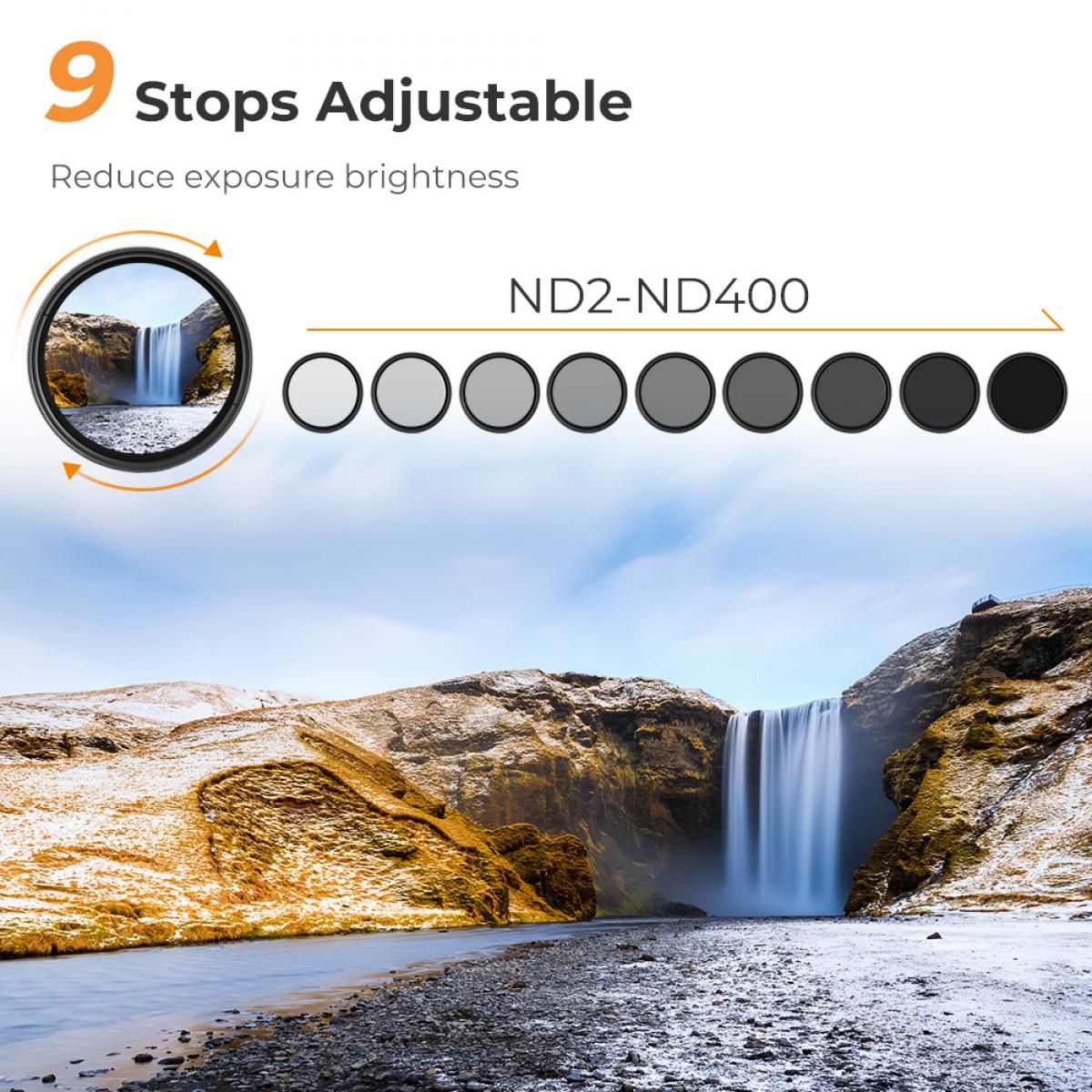
| Variable ND | Adjustable | 1–9 stops | Flexible for photo & video |
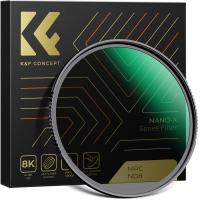
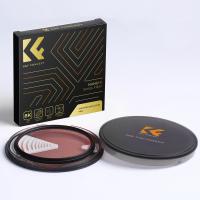
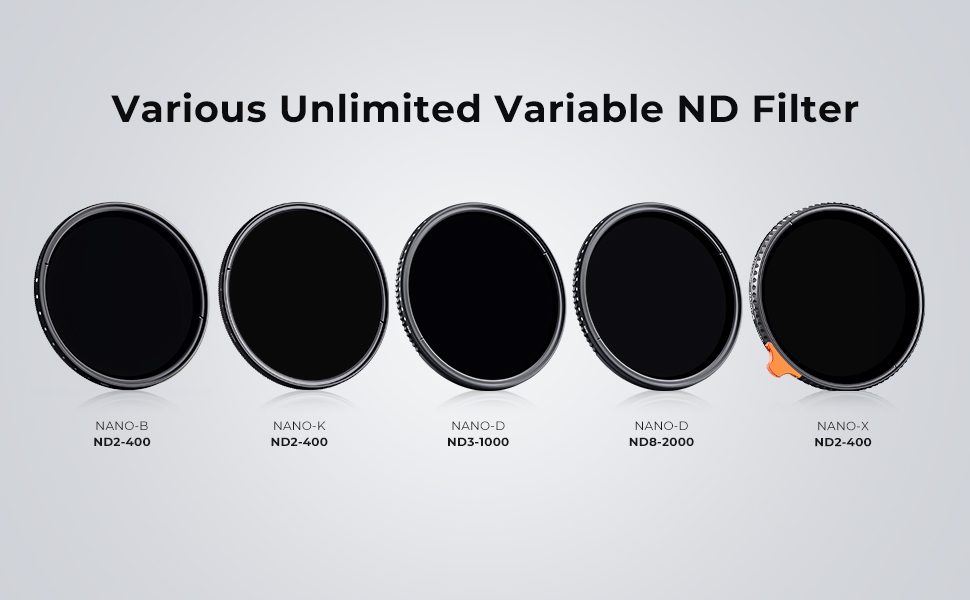
K&F Concept offers both fixed ND filters (ND2 to ND1000) and Variable ND filters that smoothly adjust intensity by rotating the outer ring — perfect for travel or hybrid shooters.
4. Types of ND Filters
1. Fixed ND Filters
Each fixed ND filter offers a specific light reduction level. They’re known for superior optical consistency, ideal for long-exposure photographers.
K&F Concept’s ND1000 filter is a favourite among landscape photographers for silky water and streaking clouds.
2. Variable ND Filters
Variable ND filters use two polarizing layers that rotate against each other, letting you adjust light reduction continuously.
Perfect for filmmakers or those who shoot in rapidly changing light.
K&F Concept Variable ND Filters feature precise rotation control, no X-pattern, and minimal colour cast — a huge advantage over cheaper options.
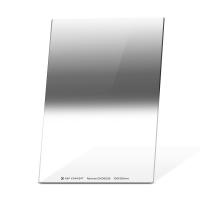
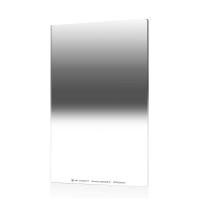
3. Graduated ND (GND) Filters
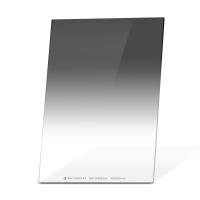
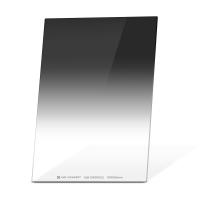
These filters are darker at one end and clear at the other, balancing exposure between bright skies and darker landscapes.
K&F Concept also produces square filter systems that let you slide GND filters to align perfectly with your composition.
5. When to Use an ND Filter
Here are some real-world situations where an ND filter makes all the difference:
-
Landscape Photography: Capture motion blur in clouds or water while maintaining correct exposure.
-
Portraits in Daylight: Shoot wide open (f/1.4 – f/2) under sunlight without overexposure.
-
Street Photography: Create motion contrast — sharp subjects against blurred backgrounds.
-
Video Shooting: Maintain cinematic shutter speed (1/50s or 1/60s) without blowing highlights.
-
Architecture: Remove crowds or moving objects using long exposures.
6. Choosing the Right ND Filter
When selecting an ND filter, consider:
| Factor | What to Check | K&F Concept Advantage |
|---|---|---|
| Stop Reduction | Choose 3–6 stops for everyday use, 10+ for long exposure. | Wide range from ND2 to ND1000 available. |
| Size / Thread | Match your lens thread (e.g., 67mm, 77mm, 82mm). | Over 20 sizes to fit all major lenses. |
| Material Quality | Look for multi-coated optical glass. | Japanese optical glass with 28-layer nano coating. |
| Colour Neutrality | Avoid filters that introduce warm or magenta tones. | K&F Concept ensures true-to-life colour balance. |
| Ease of Use | Smooth rotation, durable frame, easy cleaning. | Anti-slip knurled edge and waterproof coating. |
Explore the full lineup here:
Shop K&F Concept Black Mist Filters
7. Pro Tips for Using ND Filters
-
Use a tripod for long exposures to avoid camera shake.
-
Cover your viewfinder (on DSLRs) to prevent light leaks during long exposures.
-
Focus first, then attach the ND filter, especially with ND1000 or stronger.
-
Use manual mode or bulb mode for better control of exposure times.
-
Experiment with movement — clouds, water, traffic, and people can all create dynamic effects.
Pro Insight: I often combine a K&F Concept Variable ND Filter with a polarizer for enhanced contrast and reflection control — a setup that’s invaluable for landscape photography.
8. Final Thoughts
A Neutral Density Filter is one of the most powerful tools for creative photographers. It gives you freedom to experiment with shutter speed, aperture, and motion in ways impossible without it.
With their advanced coatings, precise construction, and excellent value, K&F Concept ND Filters deliver professional-grade performance that both beginners and experts can trust.
So next time you’re out shooting a waterfall, a busy street, or a cinematic scene in bright daylight, remember:
Sometimes the best light is the one you control — with the right ND filter.