How Do Video Surveillance Cameras Work?
Video surveillance cameras are an essential part of modern security systems, enabling us to monitor spaces in real-time and record activities for later review. But while they’ve become ubiquitous in homes, businesses, and public places, many of us are still puzzled by how these little devices actually work. Today, let's peel apart the layers of this fascinating technology and explore the inner workings of surveillance cameras in a way that balances technical insight with straight-up clarity.
The Magic Starts with the Lens
When you see a security camera mounted on a wall or ceiling, the first visible component is the lens. The lens acts as the "eye" of the camera, capturing light from the environment and funneling it into the image sensor. High-quality cameras boast various lens configurations, offering adjustable focal lengths, wide-angle views, or zoom capabilities. For example, a wide-angle lens provides broader coverage, ideal for monitoring large areas, while a narrow lens with zoom can closely observe specific targets.
Traditionally, lenses were purely optical instruments. However, digital surveillance has brought computational enhancements to lenses. Many modern cameras now use autofocus systems or software-based corrections to refine the captured image before it even hits the sensor.
Image Sensors: The Brain Behind the Vision
Once the light passes through the lens, it reaches the camera’s image sensor—a technology marvel in its own right. Surveillance cameras predominantly use two types of image sensors: CCD (charge-coupled device) and CMOS (complementary metal-oxide-semiconductor). While both transform light signals into electrical signals, CMOS sensors are more commonly found in modern cameras due to their lower power consumption and cost-effectiveness.
Here's where things get technical. As photons (light) hit the sensor, they generate electrical currents in tiny pixels on the surface of the sensor. Each pixel corresponds to a specific color and intensity of light. The camera aggregates data from all these pixels to create a composite image, typically as an array of digital information. But here's the catch—without some heavy-duty processing, this raw data would look like random noise or distorted streaks.
Image Processing in Action
This is where the digital processor steals the spotlight. Cameras have onboard processors that convert raw data into a coherent image. First, they de-bayer the data, separating colors accurately (red, green, and blue). Then, they enhance the brightness, contrast, and sharpness to ensure the resulting image is clear and discernible—essential for identifying details like a license plate or a suspicious face.
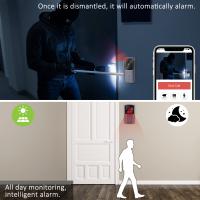
Many advanced surveillance cameras also offer features such as motion detection, facial recognition, or noise reduction. These capabilities rely on algorithms baked into the processor or pushed to remote AI systems. For instance, an AI-powered facial recognition system continuously analyzes the image feed for distinctive facial landmarks and compares them against databases—a step far beyond simple image capture.
Frame-by-Frame Playback: The Role of Video Compression
Captured footage doesn’t sit raw on your camera’s internal memory—it goes through compression first. Why, you ask? Imagine trying to store thousands of high-resolution images per minute on a tiny memory chip. To avoid this nightmare, cameras leverage video compression protocols like H.264 and H.265 to shrink the file size while maintaining visual fidelity.
Video compression works on the principle of interframe and intraframe coding. Simply put, the camera doesn’t save every frame as a separate image. Instead, it records the differences or “changes” between frames. For static scenes, like a closed room overnight, storage requirements become far lighter. Yet when a skater zips across your field of view, the frames show greater differences and require more data storage.
Real-Time Transmission to Your Device
Video surveillance cameras wouldn’t be half as useful if they couldn’t transmit data to external devices or storage solutions. Many cameras offer live-streaming capabilities, either via wired connections like Ethernet or wireless ones like Wi-Fi. When the camera connects to your local network, it transforms into a node in your digital ecosystem.
Here's how transmission works in an IP camera—the dominant type of modern surveillance system. The camera captures video, compresses it, and sends it as data packets over the internet or local network using protocols such as RTSP (Real-Time Streaming Protocol). At the receiving end, devices like your phone, tablet, or monitoring software decode these packets and rebuild the video feed, showing you what your camera sees in real time.
Some systems store compressed footage on dedicated hardware units like Network Video Recorders (NVRs). Others leverage cloud-based storage. Encrypted communication protocols protect the data during transfer to ensure it won’t fall prey to snooping hackers—a critical concern in the era of cybersecurity threats.
Night Vision: Because Security Isn’t Limited by Daylight
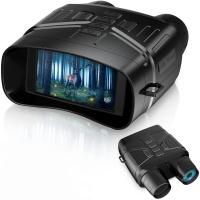
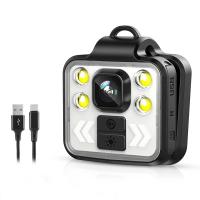
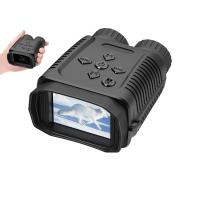
Ever wondered how cameras capture footage in pitch-black darkness? Night vision technology uses infrared (IR) light. Most surveillance cameras have tiny infrared LEDs arranged around their lenses. These LEDs emit IR light that the camera’s sensor detects but which remains invisible to the naked eye. When IR light illuminates a space, the camera sees a grayscale image even in complete darkness.
Alternative night vision technologies include thermal imaging, which is more effective at detecting heat-emitting objects like humans or vehicles. While thermal cameras come at a higher price point, their applications extend to areas where infrared night vision falls short, like foggy or smoky conditions.
Pan, Tilt, Zoom—The Fancy Moves of PTZ Cameras
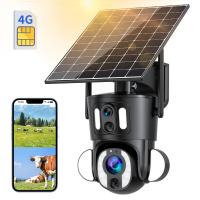
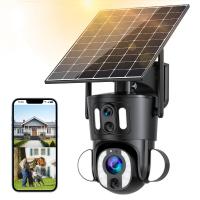
Not all surveillance cameras are static. PTZ (Pan-Tilt-Zoom) cameras allow operators to control the camera’s orientation and focus, either manually or automatically. They’re invaluable for wide-area coverage since they can swivel to track moving objects. Many PTZ cameras use motors controlled by software algorithms, enabling efficient zone-based surveillance.
For instance, you might program the camera to pan toward your back gate during specific hours and then tilt downward to closely monitor the pathway. This flexibility makes PTZ cameras a hot commodity for businesses and high-security environments.
Wrap-Up: It's All About Context
Video surveillance technology has come a long way from the grainy, unreliable footage of decades past. Modern cameras combine optical wizardry, computational processing, smart AI, and advanced connectivity to deliver high-definition, actionable insights for a range of purposes—from deterring criminals to enhancing workplace safety.
The one-word conclusion is "context." Cameras don’t just passively record what they see. They’re sophisticated tools engineered with layers of technology that adapt to scenarios, pinpoint specific concerns, and even preempt threats. The next time you glance at a surveillance camera in action, remember—it’s not just watching; it's interpreting the world with astonishing complexity.