What is ND Filter in Photography?
2025-10-30 09:36:05
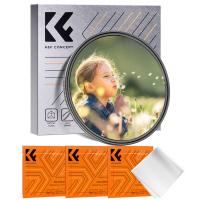
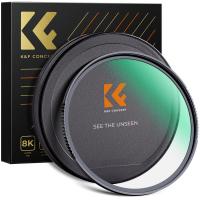
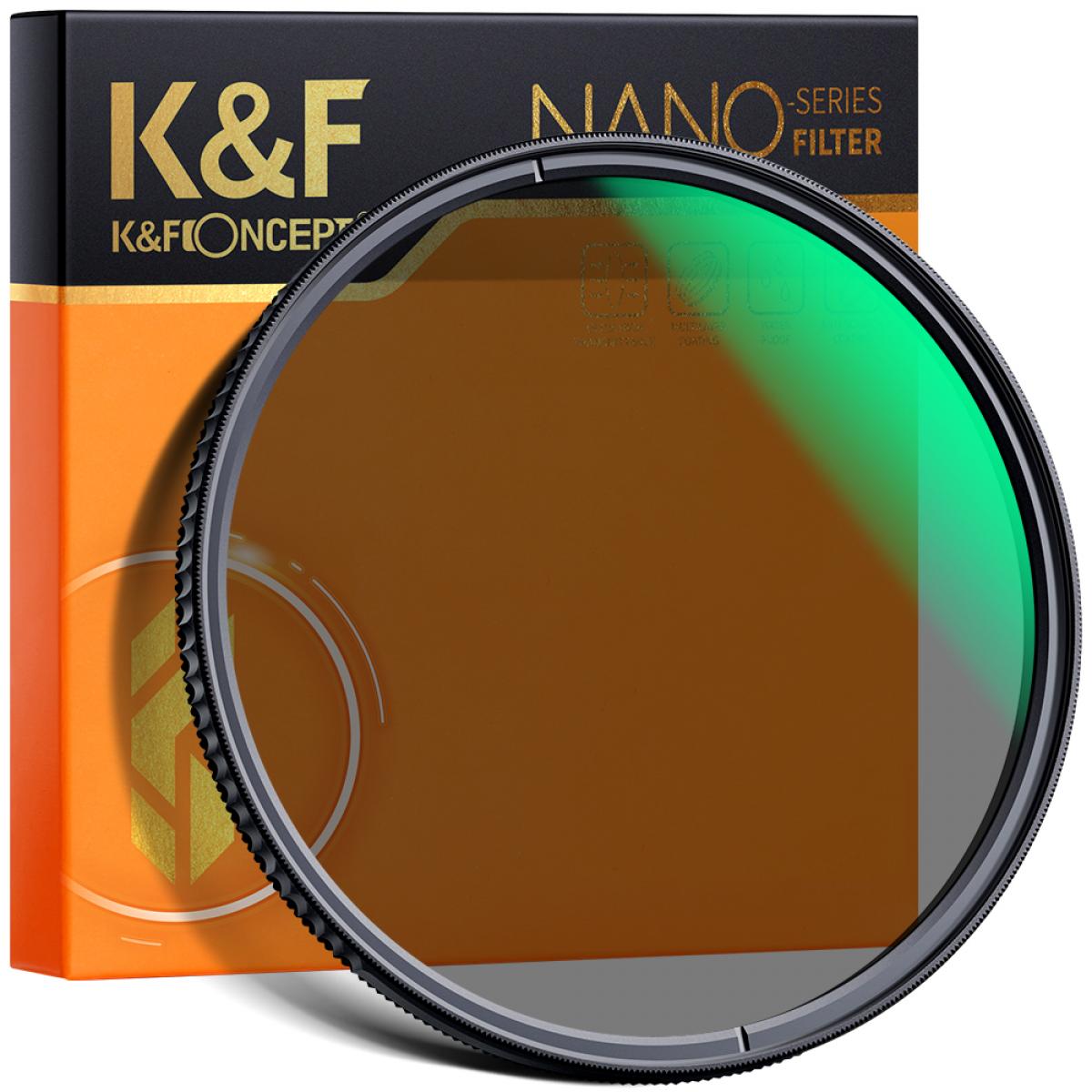
ND filters, or neutral density filters, which is a physical filter made of resin or glass that attaches to the front of your lens, are used to achieve longer exposure times in bright light. The stronger the ND filter, the longer the exposure time you can obtain. If certain areas are too bright for your desired camera settings, an ND filter may be the solution. For example, a weaker ND filter like the ND8 increases exposure time by a factor of 8, while a stronger one like the ND1000 extends it by a factor of 1000. Choosing the right ND filter strength depends on your specific use case and the visual effect you want to achieve.
When should I use a ND filter?
ND filters can serve multiple purposes. They filter out excessively bright light and enable the use of a longer exposure during broad daylight, so you can use a slower shutter speed than you would normally have to use, especially on a bright day.
That's very useful in two main areas:
When you need to slow the composition down for artistic reasons. The obvious examples is waterfalls: using a slow shutter speed creates the impression of motion as water cascades down. But it can also be used artistically in other places: at the beach, for example, with lapping waves and a slow shutter, you can create the impression of a dreamy 'mist' on the water. It's also useful for some sports photography, especially motorsport, where you might want to blur the background to create the impression of speed, but keep the subject in crisp focus.
Video. The normal rule of thumb is that your shutter speed should be double your framerate, so if you're shooting 25fps, then you're aiming for a shutter speed of 1/50. On a bright day, that's going to be almost impossible without dropping to f/22 or lower (which comes with its own problems), so an ND filter will restrict light intake and allow you to use 1/50 at a sane aperture.
If you aren't sure if you're going to use it, consider picking up a low cost one from eBay (or another second hand store) and give it a try.
Different types of ND filters.
ND (Neutral Density) filters come in several types, each designed for different purposes and levels of light reduction:
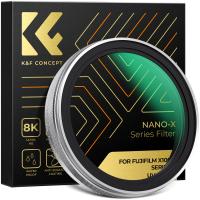
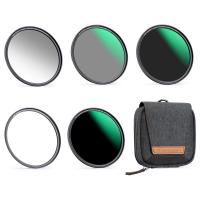
Fixed ND Filters – These have a single, constant light-reduction strength (e.g., ND2, ND8, ND64, ND1000). They are simple to use and provide consistent results.
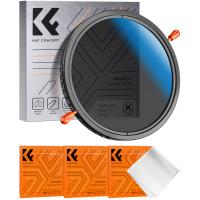
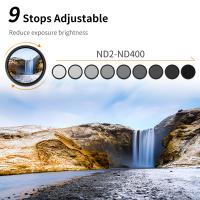
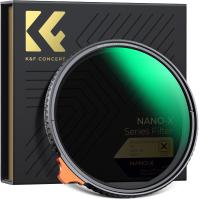
Variable ND Filters – These allow you to adjust the level of light reduction by rotating the filter, offering flexibility across a range of ND strengths (e.g., ND2–ND400).
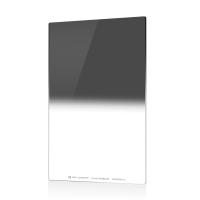
Graduated ND Filters (GND) – These have a gradual transition from dark to clear, used mainly in landscape photography to balance exposure between bright skies and darker foregrounds.
Reverse Graduated ND Filters – Similar to GND filters, but with the darkest area in the middle, ideal for shooting sunsets or sunrises where the horizon is brightest.
Center ND Filters – Darkest in the center and clear around the edges, used to correct uneven exposure caused by wide-angle lenses or vignetting.
Clip-in filters
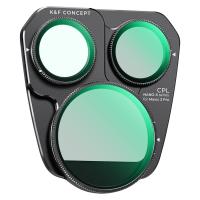
Another way to avoid the purchase of multiple filter sizes is to try a clip-in filter. It’s a filter that doesn’t go on top of the lens, but actually goes in front of the camera’s sensor. You buy this filter, put it in front of the sensor, and you can use any lens you want.
Each type serves specific creative or technical needs, from extending exposure times to balancing dynamic lighting conditions.
Square filters versus circular filters
Most filters are round and screw directly onto your lens. However, square filters that are held in front of your lens by a metal frame can be a great option, especially for graduated filters that are half dark and half light. Square filters provide the option to slide the filter up and down to adjust how the gradient aligns with the horizon of your scene.
Five Tips for Making the Most of Neutral Density Filters
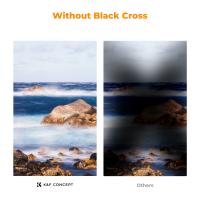
1.Fixed/solid versus variable. I suggest staying away from buying the variable ones. Those are ND filters that allow you to choose the amount of light you want to block out. I've tried a few and have yet to find one that doesn't “act up" and create serious vignetting/haloing.
2.Colour cast. Most ND filters, especially the cheaper ones, will have a colour cast, typically on the magenta side. Not to worry: if you shoot RAW,.you can quickly fix that with the colour balance slider in post. With time you'll learn what is the exact value you need to choose for perfect compensation.
3.Take several images. Because you're shooting moving elements, each new frame has the potential to look wildly different from the last one, even if your settings are unchanged. Don't assume that the best cloud/water pattern you can get will be the first one you happen to shoot. Make a point of capturing 5-10 frames so that you can choose the best one later.
4.Stacking filters. It's definitely possible. I'm personally a big fan of stacking the 10-stop with a polarizer. Just make sure your filters are cleaned regularly and that you buy the thinnest versions of the filters that you canto avoid vignetting on wide-angle lenses.
5. Focusing issues. Depending on your camera, you may be unable to focus(whether auto or manual) once you've added a 10-stop filter because it's so thick and won't let much light through, You'll simply have to make sure you nail your focus (and get it off auto and into manual) before you add the filter. Nowadays, though, most LCDs will compensate as soon as you throw the filter on, and you'll be able to work the way you usually do.
Which is better, ND filter or UV filter?
They serve different purposes. A UV filter mainly protects the lens and reduces haze, while an ND filter controls light to achieve motion blur or wide apertures in bright light. ND filters are better for creative exposure control; UV filters are better for protection.
What are the disadvantages of ND filters?
· Can cause color casts or reduced image sharpness.
· Require longer exposure times (risk of blur if unstable).
· More expensive than UV filters.
· Need careful handling to avoid vignetting or light leaks.
How to choose ND filter for camera?
· Decide your goal: motion blur, smooth water, or shallow depth in bright light.
· Pick the strength: ND8 for mild reduction, ND64–ND1000 for long exposures.
· Choose the type: fixed for consistency, variable for flexibility.
· Match the size: filter diameter must fit your lens.