What Is Binocular Vision?

Binocular vision is the brain’s sophisticated technique of merging the information captured by two eyes to create a three-dimensional perception of the world. Think of your eyes as a dynamic duo — much like Batman and Robin — working tirelessly to provide depth, perspective, and a balanced sense of spatial awareness. While one eye can certainly get the job done (a one-eyed pirate still navigates the high seas, after all), using two eyes simultaneously unlocks a whole realm of visual magic.
At its core, binocular vision is based on the concept of stereopsis. Stereopsis is the ability to perceive depth that arises because each eye captures the world from a slightly different angle. Hold your finger up in front of you and look at it first with one eye closed and then the other. Notice how your finger shifts against the background? That’s binocular disparity, the slight positional difference between your left and your right eye’s visual inputs. Your brain cleverly triangulates these disparities into a coherent depth map. Handy, isn’t it?
Now, you might be wondering, "Why should I care about binocular vision outside an eye exam or geeky science trivia?" Let’s break it down. Binocular vision is central to tasks you accomplish daily without a second thought. Catching or throwing a ball, driving a car, threading a needle, or estimating how far away your mischievous cat is perched on the counter (ready to knock over your coffee mug) — all these actions rely heavily on your ability to gauge depth and spatial relationships. Without binocular vision, your depth perception would wobble like a poorly balanced bicycle.
Interestingly, binocular vision also enhances your visual field. Because each eye has its own range, the two views together create a wider panorama than what one eye could manage alone. Imagine standing on a mountaintop with one eye covered — you’d miss out on a chunk of the breathtaking view!
Let’s get technical about how this all works. Binocular vision involves three crucial components: eye alignment, coordination, and neurological processing. For your binocular system to function effectively, your eyes need to be aligned properly, both horizontally and vertically. If one eye is misaligned (a condition often called strabismus, or colloquially "lazy eye"), the disparity between the two images can become chaotic, and your brain may struggle to piece them together. In severe cases, the brain may suppress one eye’s input entirely, leading to monocular vision (think Robin going solo without Batman — functional, but not as dynamic).
Coordination is equally vital. Your eyes must move in sync to track moving objects, focus on nearby or distant targets, and maintain stability while you’re on the move. This synchronized motion is governed by six intricate muscles in each eye, all working together like a symphony orchestra. One misstep can result in double vision and make seemingly straightforward tasks like reading a book an exercise in frustration.
Finally, the neurological powerhouse behind binocular vision is the visual cortex, located in the occipital lobe of the brain. This region acts as your 3D rendering engine, processing visual input to create depth and merge the images from both eyes. Remarkably, this process happens in milliseconds, ensuring seamless visual perception even as you dart through busy city streets or stare incredulously at your dog for eating your favorite pair of shoes.
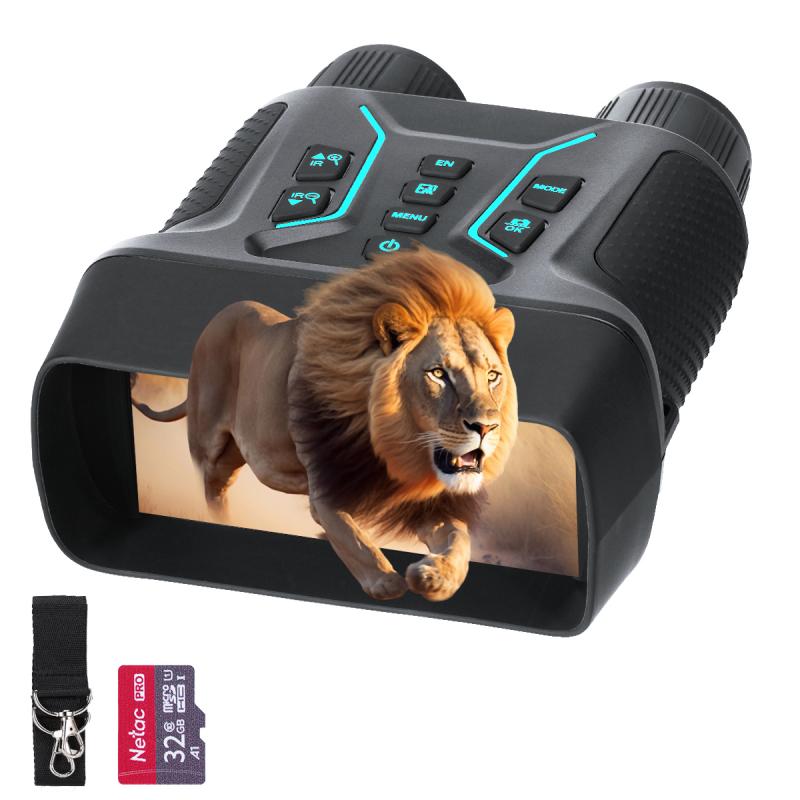
Now, as sophisticated and useful as binocular vision is, it isn’t perfect. Life has thrown humanity some curveballs like astigmatism, near-sightedness, far-sightedness, and presbyopia — all of which can muddle your binocular game. Fortunately, the tech world has stepped in with glasses, contact lenses, and even surgical options like LASIK to sharpen your visuals. So, if you’re seeing double or struggling to focus, there’s hope yet.
But wait — why stop at understanding binocular vision's functionality when we can dive into its evolution? This system wasn’t handed to humans on a golden platter overnight. Binocular vision is a product of millions of years of evolutionary refinement, fine-tuned for survival. Predators like eagles and lions possess hyper-developed binocular vision to track prey with pinpoint accuracy. In contrast, prey animals, such as rabbits and deer, evolved eyes positioned more laterally, giving them monocular vision with an ultra-wide field of view to spot danger from nearly any angle. In short, binocular vision’s origin story is a testament to life's resourceful adaptations.

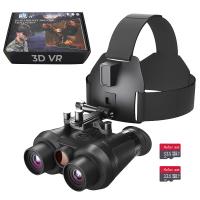
In modern society, this evolutionary masterpiece isn’t merely about survival; it influences areas like art, design, technology, and even virtual reality. Think about the dazzling 3D effects you experience while wearing VR goggles. The device simulates binocular disparity by presenting slightly different images to each eye — essentially fooling your brain into perceiving depth where there is none. Developers exploit this natural phenomenon to immerse you in virtual landscapes, from lifelike video games to mind-boggling simulations of deep space exploration.
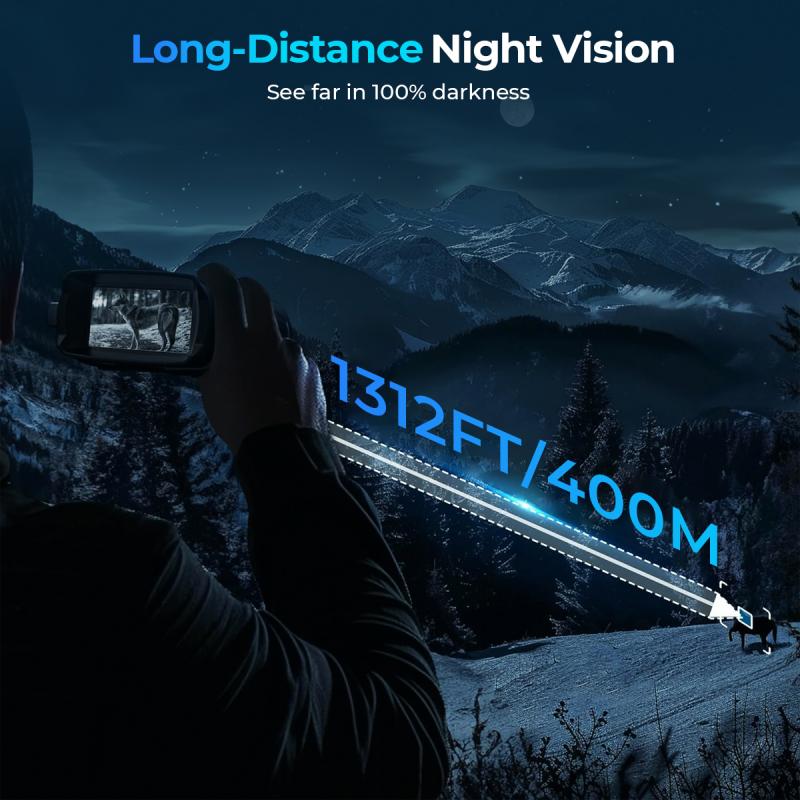
Speaking of space, did you know astronauts face challenges with binocular vision? The absence of gravity alters fluid pressure within the eye and can drastically impact their depth perception — a cosmic twist, if ever there was one. NASA tackles these anomalies using advanced imaging tools and visual exercises tailored to life in zero-gravity.
All that said, we’ve barely scratched the surface of binocular vision’s wonders. It’s not just a quirky biological feature; it's a cornerstone of how we interact with the world, whether we’re playing sports, enjoying visual arts, or steering through traffic jams. The next time you marvel at a 3D movie or expertly pour liquid into a tiny container without spilling, give a quiet nod to your binocular vision. It’s been working overtime to ensure you don’t lose your depth — metaphorically and literally.