How Do Metal Detectors Work?
Metal detectors may seem like simple gadgets — you wave the coil over the ground and it beeps when it finds something. Yet behind that beep lies a fascinating blend of physics, electronics and signal processing. In this post I’ll explain how metal detectors work, the main technologies used, and practical implications.
1. Basic Principle: Electromagnetic Induction & Eddy Currents
At the heart of virtually all metal detectors is this core idea:
-
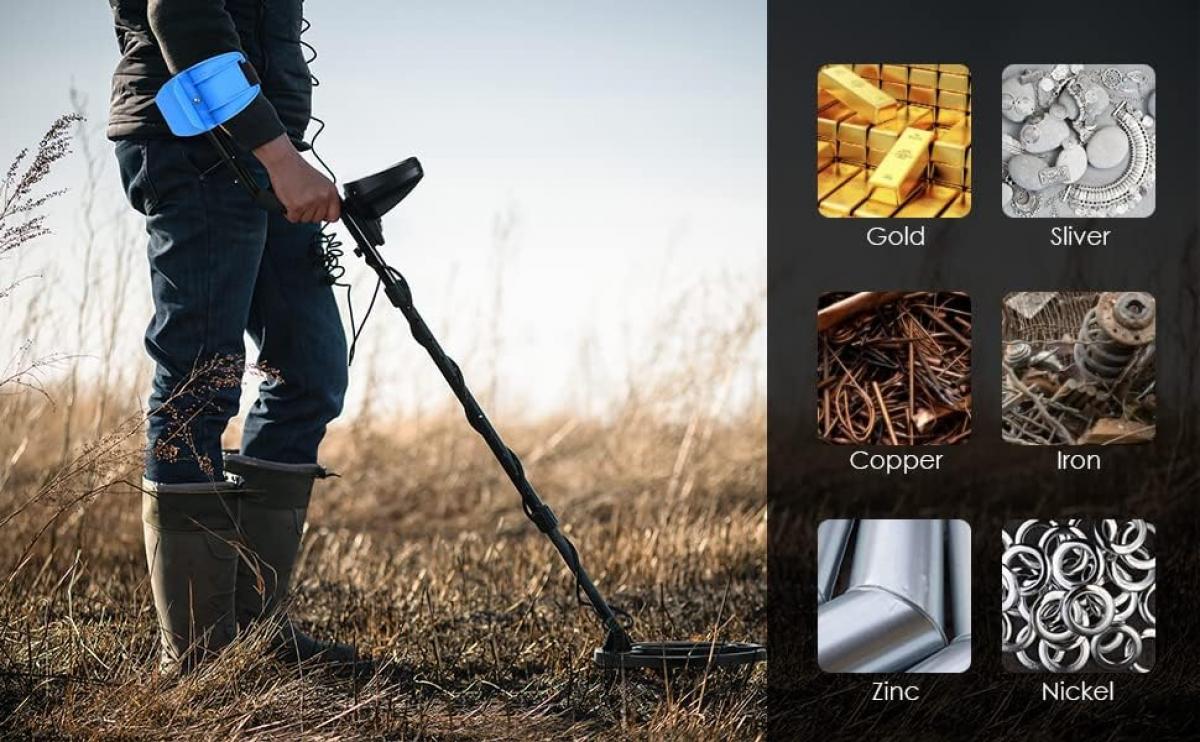
The detector has a transmit coil (or coils) that generate a time-varying magnetic field into the surrounding medium (ground, sand, etc.).
-
If a conductive (metal) object sits within that field, the varying magnetic field induces eddy currents in the object.
-
Those eddy currents themselves generate a secondary magnetic field (which differs in phase/shape from the original) that can be detected by a receive coil.
-
The detector’s electronics analyse that receive-signal (often its amplitude, phase, time-decay) to decide: “there’s something metallic here”.
Put simply:
Transmit magnetic field → metal object responds → we detect the response.
A nice summary from a practical manufacturer: “metal detectors work by transmitting an electromagnetic field from the search coil into the ground. Any metal objects within the electromagnetic field … energise and retransmit their own field. The coil of the detector receives the retransmitted field and alerts the user.”
2. Key Components of a Typical Detector
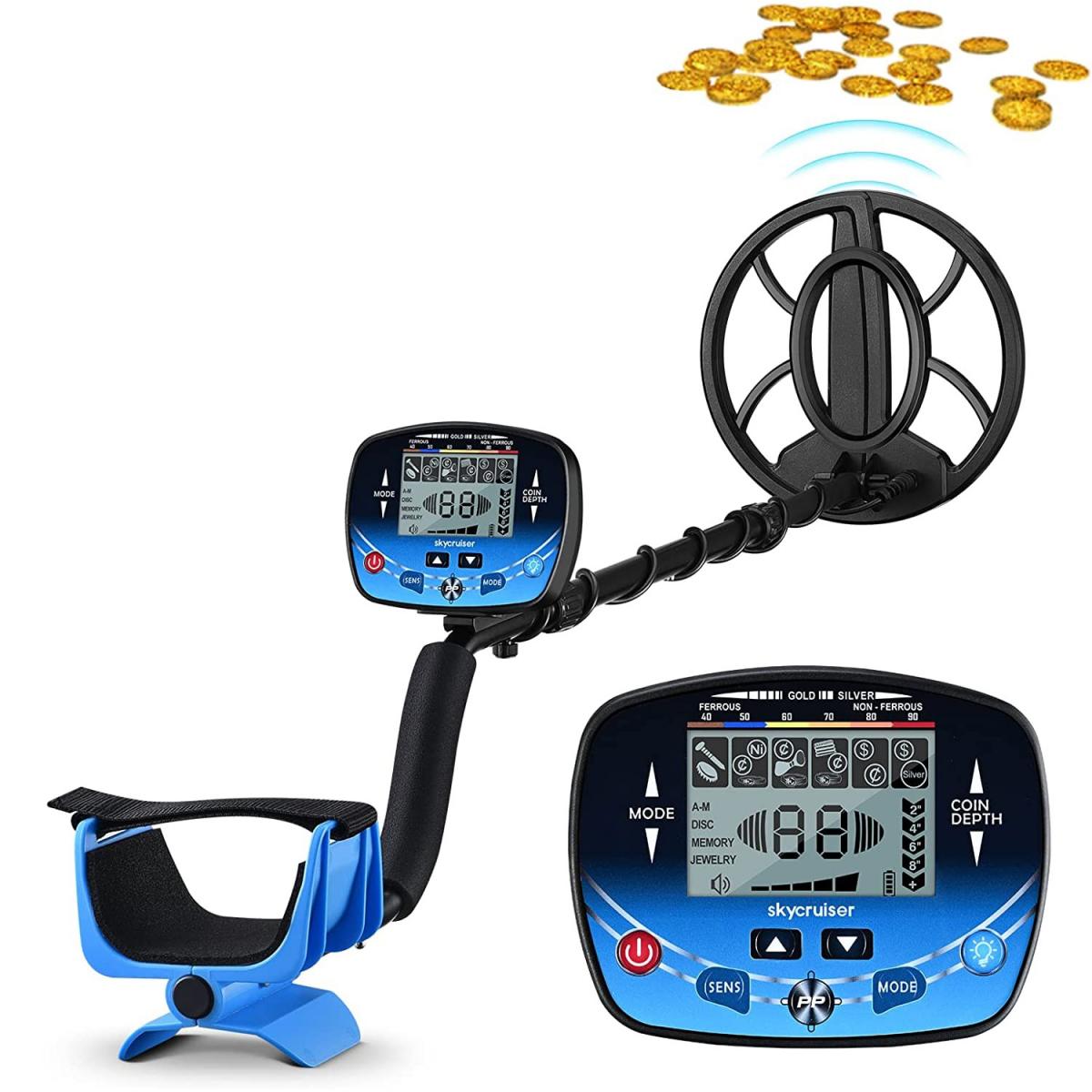
Understanding the anatomy helps link the physics to real devices.
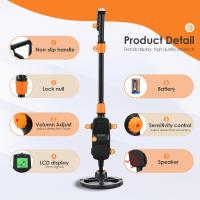
| Component | Function |
|---|---|
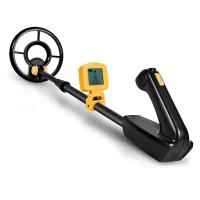
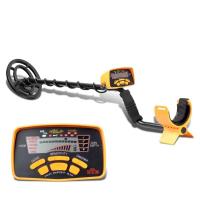
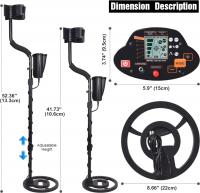
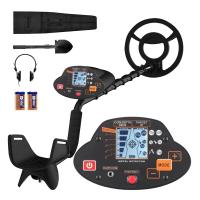
| Search coil (also called loop, antenna) | Generates the magnetic field and/or senses the response. |
| Shaft/handle | Connects coil to control box; allows comfortable movement over ground. |
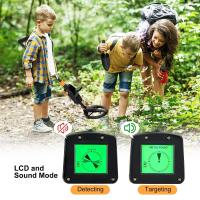
| Control box & electronics | Contains power, oscillator(s), amplifier(s), signal-processor, discrimination logic, user interface (display, tone, volume). |
| Battery/power source | Powers the electronics and coil drive. |
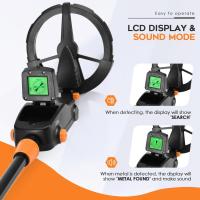
When you sweep the coil slowly over the ground, the system is continuously monitoring for changes in the magnetic/induction field signature.
3. Major Detection Technologies
There are several ways to implement the transmit-/receive paradigm. The three dominant ones are VLF (Very Low Frequency), PI (Pulse Induction), and BFO (Beat-Frequency Oscillation).
3.1 VLF (Very Low Frequency)
-
Uses two coils: a transmitter coil and a receiver coil (or sometimes nested coils) in what’s called an induction-balance configuration.
-
The transmitter coil sends a continuous alternating current at a fixed low frequency (e.g. thousands of times per second).
-
The receiver coil is shielded from the transmitter’s direct field but is sensitive to the secondary magnetic field from metal targets.
-
VLF detectors can do discrimination between metal types by analysing the phase shift difference between transmitted and received signals—because different metals (and different conductivities/inductances) behave slightly differently.
Pros & Cons
-
Pros: Good discrimination; relatively low cost; widely used in hobby detecting (coins, relics).
-
Cons: Performance can degrade in mineralised soils or saltwater; depth may be less than PI in some circumstances.
3.2 PI (Pulse Induction)
-
A transmit coil (or coils) sends short pulses of current (magnetic field) rather than a continuous wave.
-
After each pulse the field collapses, and if there is metal present, the eddy currents in the metal extend the decay time of the magnetic response. The detector measures the decay (reflected) signal.
-
Because the pulses are strong and the system monitors decay rather than steady-state, PI systems are less affected by ground mineralisation and can often detect objects deeper.
Pros & Cons
-
Pros: Better for highly mineralised ground (e.g., black sand), salt water beaches; good depth.
-
Cons: Less ability to discriminate between metals; generally more expensive/high-end.
3.3 BFO (Beat-Frequency Oscillation)
-
The simplest, oldest method: two oscillators generate slightly different frequencies, one in the search coil, one a reference; when metal is near, the field changes frequency and causes a beat tone (audible difference between the two oscillators).
-
Because it’s simple, these detectors tend to be lower cost but also lower performance.
Pros & Cons
-
Pros: Cheap, simple, perhaps okay for very basic use.
-
Cons: Poor discrimination, shallow depth, more “junk” signals.
4. What Affects Detection Performance?
Several real-world factors influence how well a metal detector works.
-
Depth of target: Larger/bigger metal objects closer to surface produce stronger signals; smaller/trickier objects deeper are harder to detect.
-
Type of metal: Conductivity and inductance of the metal matter—metals like silver/copper produce stronger responses under some systems because they generate stronger eddy currents.
-
Soil and ground conditions: Mineralised soils (high iron content, black sands) or salt water cause interference or attenuation. PI units often handle these better.
-
Search coil size & frequency: Bigger coils can detect deeper, but may be less precise with small targets; higher frequencies detect small objects better but may have less penetration.
-
Discrimination settings & signal processing: Modern detectors let you “notch out” or ignore certain types of metals (nails, pull-tabs) but this might also ignore valuable targets if set too aggressive.
5. Why Doesn’t the Detector Just Detect Its Own Metal Parts?
A question sometimes asked: “Why doesn’t the metal detector beep because of its own metal components?” The answer lies in the fact that the system is calibrated/zeroed to ignore static, unchanging metal parts.
“The design of a metal detector shields its parts from the magnetic field. … More importantly, the detector device’s metal components are always there in the same position during operations, so their effect on the magnetic field doesn’t change. The detector is looking for changes in that field, so these effects don’t trigger it.”
In short: the system is looking for changes or disturbances in the field, not static background contributions. The internal metal of the detector is “in the baseline”.
6. Practical Applications & What to Consider
Applications
-
Hobbyist treasure hunting (coins, relics)
-
Security screening (walk-through detectors at airports, events)
-
Industrial: detecting metal contaminants in food, manufacturing lines.
-
Archaeology and prospecting (gold nuggets, buried metal artefacts)
What to consider when choosing/using one
-
Choose the right technology for your environment: e.g., if beach/salt water, maybe PI.
-
Check coil size (bigger = more depth; smaller = more precision in tricky areas).
-
Ensure good discrimination capability if you want to avoid constant false alarms (junk).
-
Be aware of ground conditions and how they may affect sensitivity.
-
Sweep the coil steadily and at the correct height above ground for best detection (too high = weak signal).
-
Maintain calibration/ground-balance (some models require manual ground-balance) to reduce interference.
7. Summary – Key Takeaways
-
Metal detectors operate by transmitting a magnetic field and sensing the response from conductive objects.
-
Three major technologies: VLF (most common), PI (good for difficult ground), BFO (basic/cheap).
-
Performance is influenced by metal type, depth, coil/technology choice, and ground conditions.
-
Discrimination and signal-processing allow modern devices to identify and ignore unwanted targets—but this comes with trade-offs.
-
Always consider usage scenario when selecting a detector (beach, relic hunting, security, industrial).
Conclusion
Although my usual domain is cameras, lenses and capturing light, the underlying approach to evaluating equipment is similar: understand the physics, know the trade-offs, and match the tool to the task. With metal detectors, the “image” you’re really capturing is hidden beneath the surface—so understanding how the instrument interacts with its environment is essential.
If you’d like, I can follow this up with a buyer’s guide or review of specific metal detector models (what features to look for, which tech for which scenario). Would you like that?
![Carbon Monoxide Detectors Portable Temperature Detector/Humidity Sensor/Air Quality Meter Smoke CO Gas Monitor [3 in 1] Alarm](https://img.kentfaith.de/cache/catalog/products/de/GW40.0007/GW40.0007-1-200x200.jpg "Carbon Monoxide Detectors Portable Temperature Detector/Humidity Sensor/Air Quality Meter Smoke CO Gas Monitor [3 in 1] Alarm")